
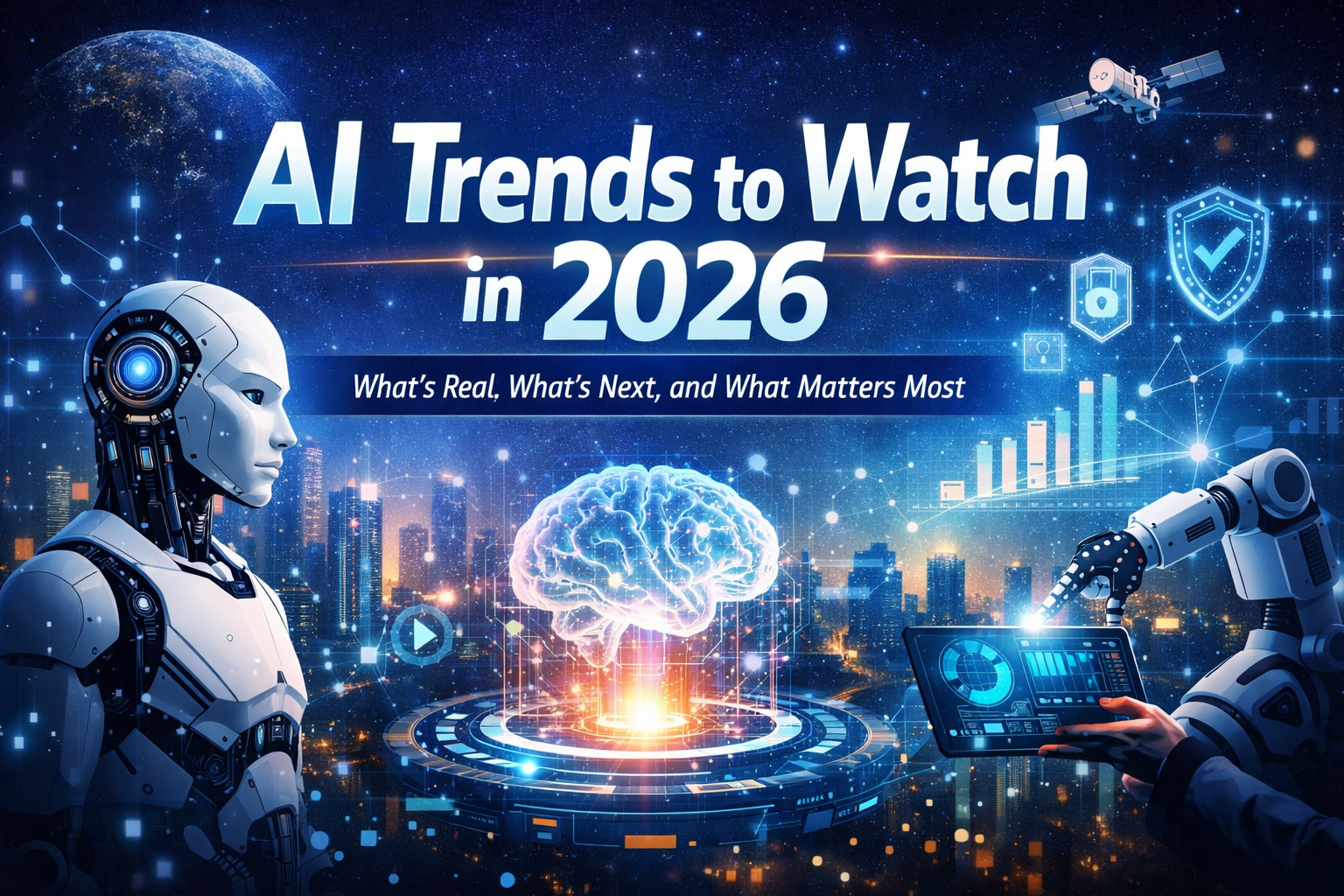
In 2026, the AI landscape is moving from hype to real impact — with trends like agentic AI (autonomous systems), multimodal intelligence, privacy-focused models, synthetic data, and AI governance shaping the future of work, creativity, and business outcomes. These trends are influencing how companies adopt AI for strategic goals, embed it into products, and balance innovation with ethics and regulation.
Artificial Intelligence isn’t just advancing — it’s transforming how we work, create, and even legislate technology. In 2026, the biggest AI conversations aren’t about what AI can theoretically do — they’re about what it is actually doing right now in enterprise systems, consumer products, and governance frameworks.
This article explores the most significant AI trends of 2026 that will matter for businesses, developers, creators, and everyday users — blending practical impact with forward-looking insight.
1. Agentic AI Goes Mainstream
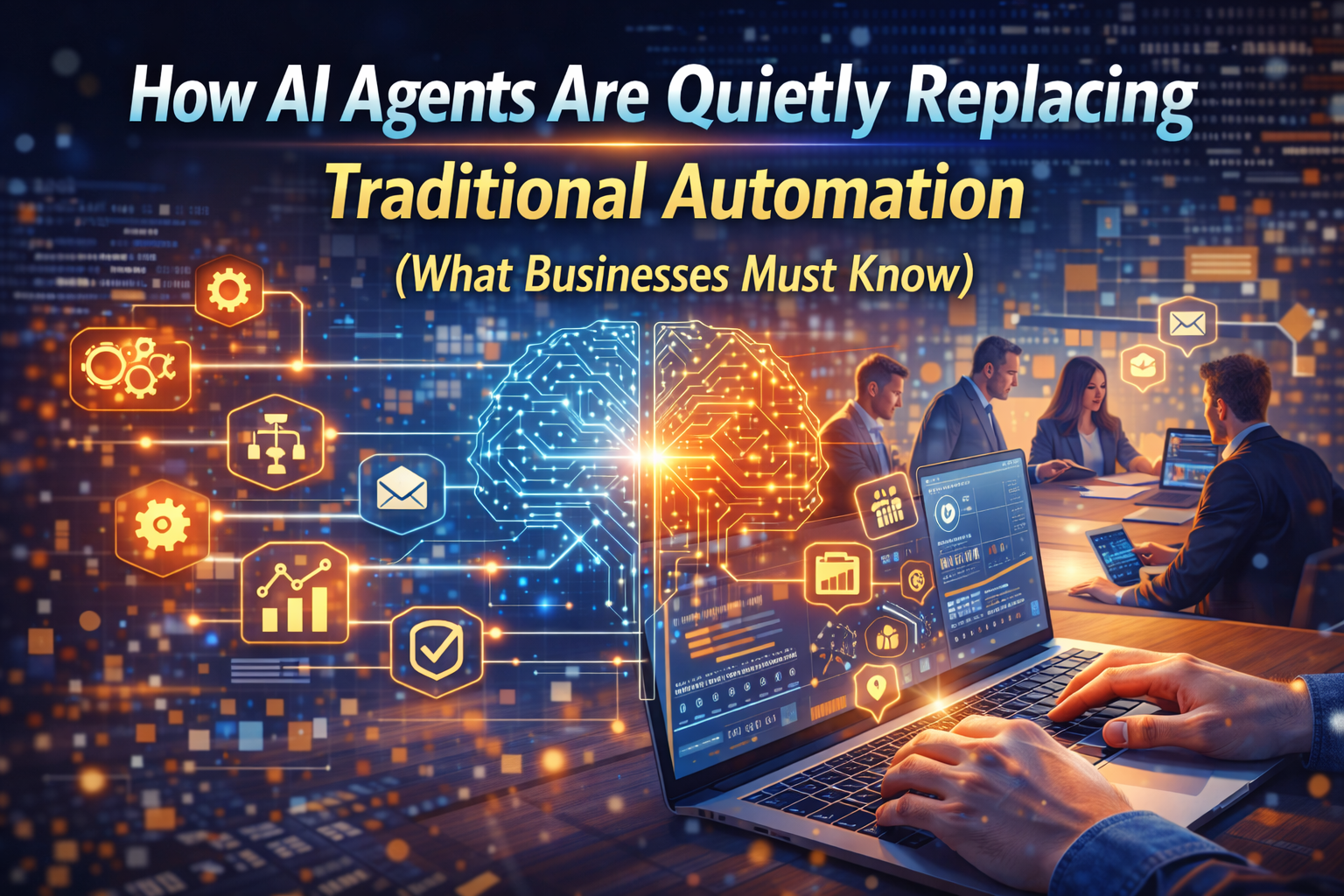
The transition from reactive generative AI to agentic AI — systems that can autonomously plan, act, and execute tasks without constant prompts — is already underway. These agents can manipulate documents, manage tasks, coordinate workflows, and integrate across business systems to deliver outcomes rather than just answers.
Why this matters:
• Companies will adopt AI agents for process automation, customer support workflows, and decision acceleration.
• Employees increasingly become AI supervisors — orchestrating agents rather than executing manual tasks themselves.
2. Multimodal AI Becomes Standard
AI models in 2026 are no longer restricted to text — they seamlessly combine text, image, voice, video, and sensor data into unified workflows. This evolution allows deeper interaction and richer outputs (e.g., voice-prompted video generation or immersive AI narratives).
Example use cases:
• An AI assistant that can see your screen, listen to your voice request, and execute a task like creating a presentation.
• Generative video tools that adapt narrative based on audience feedback in real time.
3. Privacy-First AI and Data Governance
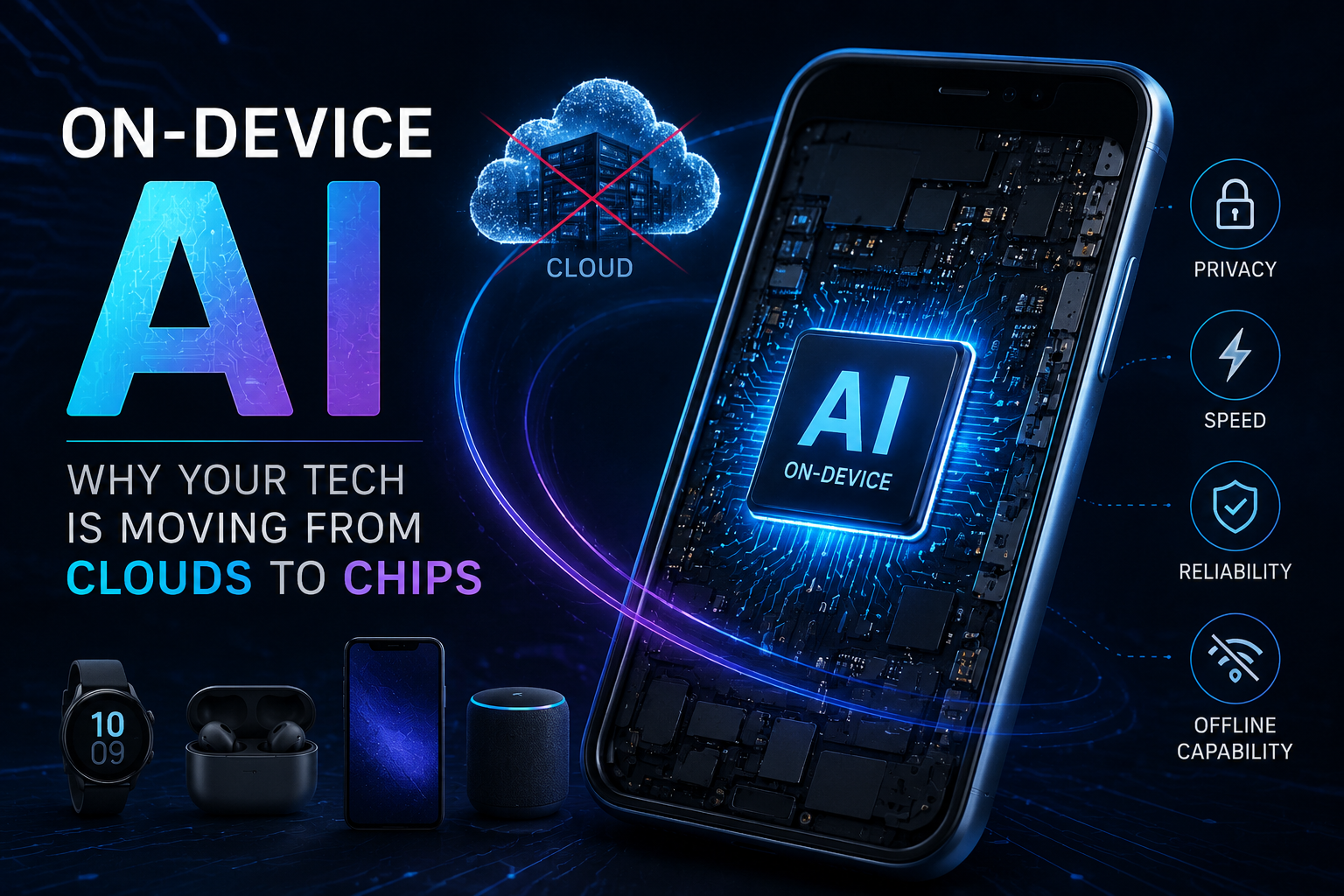
As AI adoption grows, so does awareness of privacy risks and ethical usage. Companies are increasingly deploying privacy-centric AI models that process data locally on devices or within secure enterprise networks — avoiding centralized, data-exposed models.
Key implication:
AI products with privacy guarantees will attract more enterprise customers — especially in regulated regions like Europe and Canada.
4. Synthetic Data Fuels Smarter Analytics
Limited or sensitive real data often hampers AI development. In 2026, synthetic data — artificially generated but statistically reliable data — is unlocking analytics, simulations, and training without exposing sensitive information.
Benefits include:
• Safer model training for sectors like healthcare and finance
• Rapid scenario simulations for fraud detection and logistics planning
5. AI Governance and Regulation Moves From Theory to Practice
Regulatory frameworks such as the EU AI Act and emerging national AI policies are now shaping product roadmaps and compliance strategies. In 2026, companies must embed governance, transparency, and risk management into AI systems to avoid penalties and build trust.
What’s changing:
• Board-level AI risk committees
• Product risk categorization based on AI safety levels
• Audits for fairness, bias, and explainability
6. AI Safety and Trust Become Competitive Edges
A shift from hype to trust and ROI means businesses measure AI success not by novelty — but by reliable outcomes, ethical data handling, and explainable results. Only AI systems with sound validation frameworks and accountable architectures are likely to scale widely.
This impacts:
• Enterprise purchasing decisions
• Developer adoption patterns
• Consumer confidence
7. Physical AI and Human-Machine Collaboration
AI isn’t just digital — it’s entering physical spaces through robotics and intelligent systems that can interact with environments, people, and objects. Robots trained with multimodal AI are now assisting in retail, logistics, and even surgical applications, emphasizing collaboration between humans and machines.
What’s next:
• Context-aware robots capable of real-world learning
• Intelligent automation beyond factory floors
8. Domain-Specific AI Models Rise
Instead of one huge AI model for everything, the trend is shifting toward specialized models tailored for specific industries — healthcare, finance, manufacturing, and more. These domain models offer higher accuracy, better compliance, and stronger performance for niche tasks.
9. Creator and Entertainment AI Explode
Generative AI isn’t just for text — AI video, interactive narratives, and dynamic content generation are transforming entertainment, advertising, and media workflows. In 2026, major studios leverage generative pipelines to cut production costs and accelerate creative iteration.
10. AI in Everyday Devices
The next wave of AI enters everyday hardware. Companies like Samsung plan to embed AI intelligence in mainstream smartphones, wearables, and IoT ecosystems, making AI a constant companion in daily life rather than just a backend cloud service.
Conclusion
The future of AI in 2026 isn’t about one killer app — it’s about integration, autonomy, governance, and context-rich intelligence. AI is moving from assistive gadgets to strategic business platforms, adaptive workflows, and responsible technologies that power real outcomes.
To stay competitive, individuals and organizations must focus on practical adoption, ethical usage, and continuous learning — moving beyond buzzwords to actual business value.